Accounts Receivable Reconciliation in Automotive: An Underrated Profit Driver Copy
In automotive, complex self-billing processes, material price surcharges (MPS), chargebacks, and international operating structures regularly lead to discrepancies in accounts receivable reconciliation. Even small deviations, when multiplied across high volumes, directly impact margin, cash flow, and DSO.

Ingo Cassack
Editor
Branchen & Anwendungsfälle
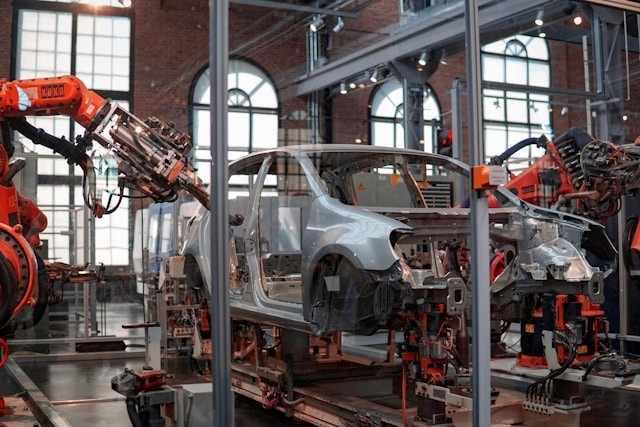
The automotive supplier industry operates under structural pressure. Volatile raw material prices, global production networks, OEM platform strategies and the transition to electric mobility are increasing operational complexity, while EBIT margins remain structurally low. Recent industry analyses show that average EBIT margins of global automotive suppliers declined to approximately 4.7 percent in 2024¹. At the same time, higher financing costs and tighter credit conditions are adding further pressure across the supplier landscape².
In this environment, performance is not determined by production excellence alone. The quality of financial processes becomes equally critical. Accounts receivable reconciliation is one of the most underestimated levers. Every undetected discrepancy directly impacts margin, liquidity and working capital.
Reconciliation is not a back office afterthought. It is an active driver of financial performance.
Where Systematic Discrepancies Arise in Automotive
The billing logic in automotive is structurally complex and significantly more dynamic than in many other industries. Self billing, also referred to as evaluated receipt settlement, dominates supplier OEM relationships. Settlement is based on EDI schedules, goods receipt postings, consignment inventories and predefined pricing and condition models.
Even minor deviations between delivery schedules, actual shipments, goods receipts or pricing parameters create discrepancies, particularly when data sources run asynchronously or pricing updates are not aligned across systems.
Typical industry specific drivers include:
Material price surcharges with retroactive index adjustments
Chargebacks related to quality issues or OTIF performance
Bonus and malus mechanisms embedded in global framework agreements
Currency and valuation differences across international plant structures
Inconsistent data between OEM portals, EDI interfaces and internal ERP systems
While production and logistics processes are highly standardized and synchronized, financial reconciliation often remains fragmented. Manual exports, spreadsheet based reviews and disconnected systems delay discrepancy detection. The real risk rarely lies in single large deviations, but in recurring small discrepancies that accumulate across high volumes.
When Small Deviations Create Large Financial Impact
In automotive, scale amplifies impact.
If discrepancies are identified weeks after settlement, valuable time is lost. Open items accumulate, escalation cycles extend and working capital remains unnecessarily tied up. At the same time, visibility into true earnings quality declines, as operational margin erosion becomes visible too late in financial reporting.
Working capital pressure is clearly reflected in payment cycles. According to the EY Automotive Working Capital Report 2024, OEMs collect receivables after approximately 23 days on average, while suppliers wait around 67 days for incoming payments³. Broader industry studies also confirm a structural increase in days working capital across the automotive sector over recent years⁴.
In high volume platform business, even a few cents deviation per unit can grow into substantial amounts over time. The longer discrepancies remain unresolved, the lower the probability of successful recovery from the OEM.
Reconciliation directly influences cash flow stability, DSO, forecast reliability and ultimately EBIT quality. The key question is not whether discrepancies occur, but how quickly they are identified and how systematically they are addressed.
From Manual Clarification to Automated, Line by Line Reconciliation
In automotive environments, the relevant data already exists across ERP systems, EDI portals, performance records and payment data. The real challenge lies in connecting these systems and analyzing transactions at line item level.
This is where the Donnerstag.ai Reconciliation Layer comes in. Acting as a centralized automated layer across existing systems, it integrates ERP data, self billing documents, chargebacks, performance records and bank transactions regardless of structure or format.
By combining deterministic rules with AI powered matching, transactions are reconciled line by line. Each position is analyzed, discrepancies are automatically detected and root causes such as quantity, pricing, index or timing differences are clearly classified. Instead of isolated case by case analysis, finance teams gain a consistent data driven overview of all open items.
Discrepancies are not only identified but structured, prioritized and processed within a fully auditable workflow. Reconciliation shifts from reactive clarification to proactive financial steering, delivering greater transparency, stronger cash flow stability and improved earnings quality.
Reconciliation as a Strategic Leadership Responsibility
Organizations that treat accounts receivable reconciliation as a strategic process rather than an administrative obligation create transparency across the entire value chain, from production confirmation to cash receipt.
Suppliers that invest early in digitalization and automation do more than protect margin and liquidity. They position themselves as reliable partners in an increasingly data driven automotive ecosystem and strengthen their financial resilience in a market that does not tolerate inefficiency.
¹ Roland Berger and Lazard. Global Automotive Supplier Study 2025: Profitability and Value Creation in the Automotive Supplier Industry. 2025.
² Verband der Automobilindustrie (VDA) and Oliver Wyman. Automotive Suppliers Study 2024: Financing Conditions and Transformation Pressure in the Supplier Industry. 2024.
³ EY. Automotive Industry Working Capital Report 2024. Ernst & Young, 2024.
⁴ PwC. Automotive Working Capital Study 2022: Managing Capital Efficiency in a Volatile Environment. PricewaterhouseCoopers, 2022.